
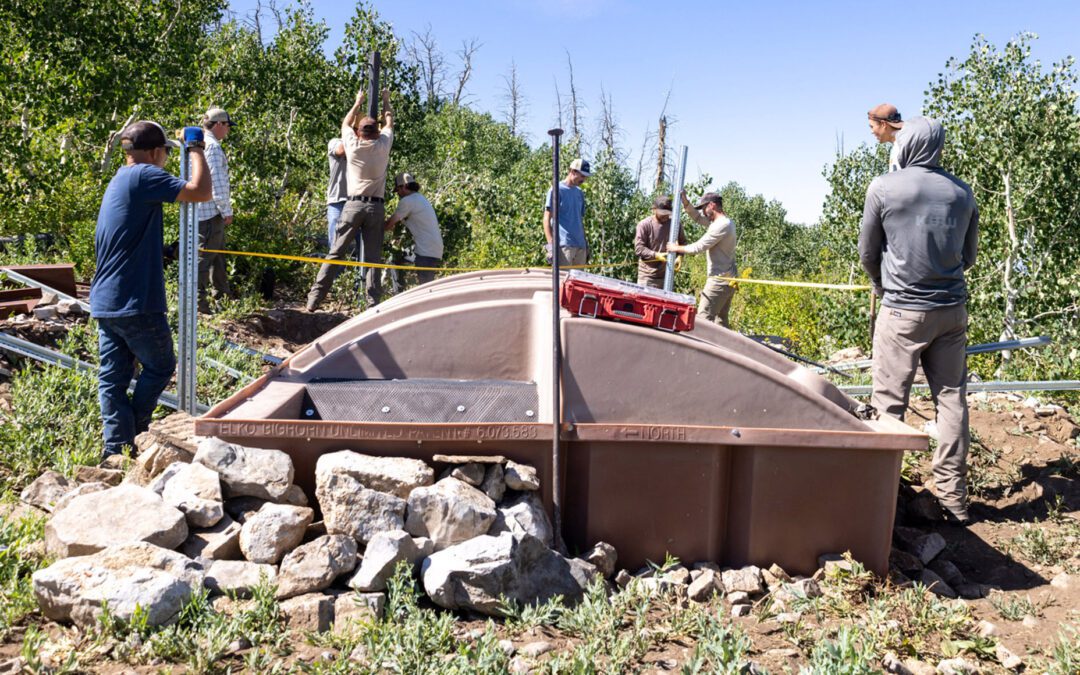
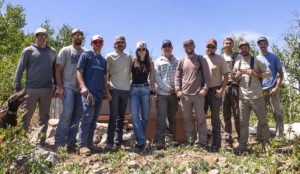
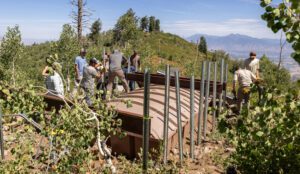
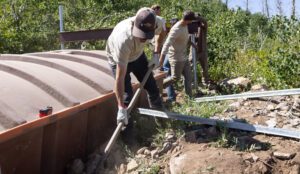
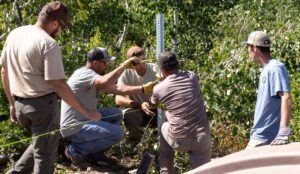
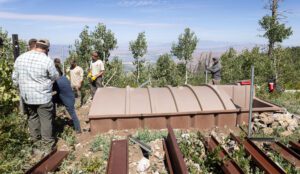
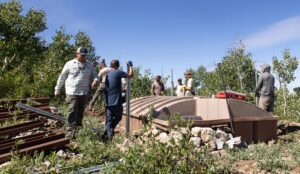
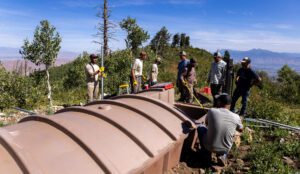
On August 8th, volunteers with the Utah Wild Sheep Foundation, participants of the DWR Dedicated Hunter program, and the Utah Division of Natural Resources (DNR) joined forces on the Nebo Range. Their goal: a critical conservation project installing guzzlers to support Bighorn sheep populations. After a brief safety meeting, the group split into two teams, each tasked with installing large aprons onto the tops of Boss tanks (large water storage tanks) that had been flown in by helicopter a couple of months prior. These aprons play a vital role in capturing rainfall and directing it into the tanks, ensuring that water remains available for wildlife in an otherwise arid and challenging environment.
The guzzler project embodies the very purpose and mission of the Utah Wild Sheep Foundation. As outlined by the organization, our goal is to promote and enhance populations of wild sheep in Utah. With strategic fundraising, educational outreach, and strong partnerships, the Foundation continues to protect the future of wild sheep. Projects like the Nebo guzzlers directly reflect our mission—providing reliable water sources that boost sheep survival and help maintain thriving herds across the state.
Utah’s Wild Sheep Foundation conservation story is one of growth and perseverance. In 1982, only 10 Desert Bighorn sheep permits were issued statewide and by 1991, Rocky Mountain Bighorns had only just been reintroduced. Fast forward to 2025, and Utah will issue 95 Desert Bighorn permits and 64 Rocky Mountain Bighorn permits—an incredible testament to conservation progress. Much of this success is owed to partnerships between agencies, dedicated volunteers, and organizations like Utah WSF that have invested both time and funding into habitat improvements and water projects.
The guzzlers themselves consist of a rain-catching apron, a buried tank for water storage, and an accessible trough for wildlife. Without these systems, Wild sheep would face severe survival challenges during long dry seasons, and lamb recruitment would plummet. Today, nearly 900 guzzlers have been installed across Utah, benefiting not only Bighorn sheep but also a wide range of wildlife species. The Nebo project added yet another lifeline to this network of survival.
The Utah Wild Sheep Foundation has grown tremendously in its capacity to take on projects of this scale. Once operating on banquet revenues of less than $125,000 a year, the Utah WSF has expanded to raise over $500,000 annually through events, sweepstakes, and membership support. The Foundation also runs at a 92% efficiency rate, where this funding translates directly into boots-on-the-ground projects like the Nebo guzzlers—visible proof of how grassroots efforts can transform landscapes.
As the final apron was secured, the sense of accomplishment among volunteers was undeniable. This was more than a day of hard work and a 1,000-foot elevation climb in the mountains—it was a continuation of Utah’s legacy of wildlife conservation. The future looks bright for wild sheep on the Nebo Range, and with every project completed, the Utah Wild Sheep Foundation moves closer to its vision of being the best-managed and most respected chapter in North America.